01 — The grading decision
Is Pokemon card grading worth it?
Almost never, for a collection like yours. The economics only work on a card that is already valuable and already close to perfect.
02
What grading actually is
You send a card to a third-party company. They authenticate it, assess its condition against a published standard, assign a numeric grade, and seal it in a tamper-evident plastic case with that grade printed on the label. The card can never come out without destroying the case.
What you are buying is the removal of a buyer's uncertainty. An ungraded card is sold on photographs and trust; a graded card is sold on a number from a company that financially guarantees it. That is genuinely worth something — which is why a high-grade example of a desirable card sells for considerably more than the same card raw.
What you are not buying is any improvement to the card. Grading does not protect a card you were going to keep anyway — a magnetic holder does that for a fraction of the cost — and it does not make an ordinary card valuable. It converts condition into a certified number, and the number is only worth paying for if someone is going to buy it.
03
When it does not make sense
- The card is worth less than the grading fee. This covers the overwhelming majority of cards. If the fee is a significant fraction of the card's raw value, the grade cannot earn it back.
- The card has a visible flaw. A crease, a soft corner, surface scuffs or edge whitening caps the grade, and a low numeric grade adds little or nothing to a card's value.
- You are keeping the card. If it is never being sold, you are paying for a number nobody will read. A 35pt magnetic holder protects it better than a toploader for a fraction of a grading fee.
- It is a child's favorite card. A graded card is sealed in plastic forever. For a card whose purpose is to be looked at and shown to friends, that is a downgrade, not an upgrade.
- You are doing it to find out what it is worth. Grading is not an appraisal service. Look the card up first; if it is not already valuable, the grade will not make it so.
04
When it does make sense
- The card is already valuable and visually near-perfect. Sharp corners, clean surface, well-centered, no whitening. These are the cards where a high grade multiplies value rather than adding a rounding error.
- You are selling, not keeping. Grading is a selling tool. If the card is going to market, the certified number is what lets a distant buyer bid confidently.
- Authenticity is a real question. On an older or heavily counterfeited card, authentication alone can be the point. How to spot fakes.
- You have enough cards to use bulk submission rates. Per-card economics improve with volume, which is why the people for whom grading works are the people doing it at scale rather than one card at a time.
05
What to look for before you submit anything
Inspect the card properly first, because the grade is decided before you post it. Hold the card under a single light source and tilt it: surface scratches and print lines only show in raked light. Check all four corners under magnification. Look at the border widths on all four sides, because centering is a grading criterion and a badly centered card cannot score at the top regardless of how clean it is.
Then check the edges for whitening, which is the most common silent grade-killer on modern cards and is usually caused by the card having been handled unsleeved. If you find any of these, the card is a keeper rather than a submission, and the right destination is a magnetic holder.
And do not clean it. Grading companies publish designations for evidence of cleaning and altered stock, and a card found to carry an applied substance is labelled altered instead of receiving a number — which is worth far less than a low grade would have been. A dry microfibre wipe is the limit. How to clean cards safely.
06
What a submission physically requires
Not a toploader. Grading companies ask for semi-rigid card savers, because a semi-rigid flexes under transit pressure instead of transferring it to the card's corners, and because it can be slid off without being cut open. A toploader has to be cut to get the card out, which is why submissions in toploaders are a problem.
The card goes in a penny sleeve, the sleeved card goes in a semi-rigid, and the semi-rigids are bundled, wrapped and packed so nothing moves in the box. Card Saver 1 is the holder named in PSA's own submission guidance; BCW's semi-rigid is the same category and is frequently in stock when Card Savers are not — check your grader's current wording before you rely on it.
Disclosure — Pull & Binder earns a commission when you buy through our Amazon links, at no extra cost to you. It does not change which products we pick or what we say about them. How this site is funded.
How we score. Five things we can check from published specifications and material claims: how much protection the sleeve or holder actually gives, how it fits standard cards and standard pockets, how it holds up to handling, how clear the front face is, and what it costs for what it does. Our scores against our rubric, published so you can weigh it differently.
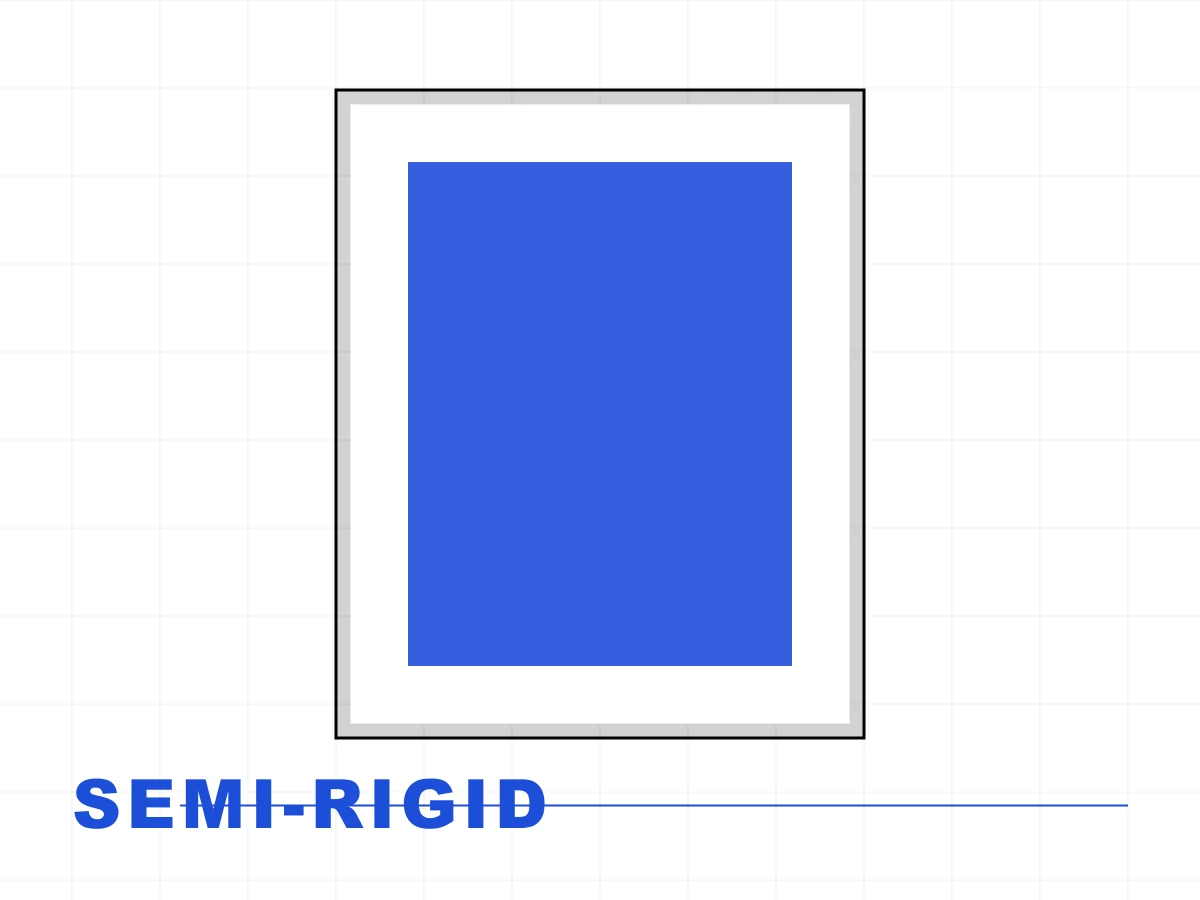
Cardboard Gold Card Saver 1
Cardboard Gold
The semi-rigid holder PSA actually asks for. Firm enough to protect the card, flexible enough that pressure in transit does not transfer to the corners. Not interchangeable with a toploader.
Typical price: entry-level. We do not print a number — check the current price on Amazon before you buy.
#ad — we earn a commission on qualifying purchases. Price and stock are shown on Amazon.
Specs
- Semi-rigid, top-loading
- Named in PSA's own submission guidance
- Commonly sold in 50- and 200-count packs
- Holds thin and thick cards
What is good
- The holder PSA's guidance specifies for submissions
- Flexes under transit pressure instead of transferring it to the corners
- Grips the card with no internal movement
What is not
- Not a display holder — it is cloudy and unattractive
- Easy to crease the card if you force it in at an angle
- No protection at all against a direct impact
Scored against our rubric
- Protection
- 0.0
- Fit
- 9.5
- Durability
- 0.0
- Clarity
- 5.0
- Value
- 9.0
BCW Semi-Rigid Card Holders
BCW
BCW's semi-rigid is the same category as a Card Saver 1 and is frequently in stock when Card Savers are not. Check your grader's current wording before you submit in one.
Typical price: entry-level. We do not print a number — check the current price on Amazon before you buy.
#ad — we earn a commission on qualifying purchases. Price and stock are shown on Amazon.
Specs
- Semi-rigid, top-loading
- Commonly sold in 50- and 200-count packs
- Several thickness grades
What is good
- Available when Card Saver 1 is backordered, which happens often
- Thickness grades for thicker cards
- Cheap in volume
What is not
- PSA's guidance names Card Saver 1 specifically — check current terms
- Slightly looser grip than a Card Saver 1
- Same cloudy, non-display appearance
Scored against our rubric
- Protection
- 0.0
- Fit
- 8.5
- Durability
- 0.0
- Clarity
- 5.0
- Value
- 9.5
Ultra Pro ONE-TOUCH Magnetic Holder (35pt)
Ultra Pro
A sealed two-piece case with a magnetic closure, diamond-cut corners and UV-blocking plastic. This is where a card goes when it is too good for a toploader and not going to grading.
Typical price: upper-tier per card. We do not print a number — check the current price on Amazon before you buy.
#ad — we earn a commission on qualifying purchases. Price and stock are shown on Amazon.
Specs
- 35pt card capacity
- Magnetic closure, fully enclosed
- UV-blocking non-PVC plastic
- Diamond corners to protect card corners
What is good
- Fully closed — no open edge for dust or a slip-out
- The UV additive is real protection for a displayed card
- Snug on a card in a penny sleeve
What is not
- Many times the price of a toploader
- 35pt is tight on a double-sleeved card — size up if yours is
- Magnets can pick up each other in a stack
Scored against our rubric
- Protection
- 0.0
- Fit
- 8.5
- Durability
- 0.0
- Clarity
- 9.5
- Value
- 6.5
Prices and stock are shown on Amazon, not here. Our price data was last refreshed October 6, 2026.
07
The alternative almost everyone should choose
A 35pt magnetic holder. It is fully enclosed with a magnetic closure, has diamond-cut corners, and uses UV-blocking plastic, so a card inside it is protected against dust, bending, slipping out and sunlight. It costs a fraction of a grading fee, the card can come back out, and it looks good on a shelf.
For a child's best card, that is the right answer and grading is not. The card stays protected, stays visible, stays theirs, and if in fifteen years it turns out to matter, it will be in the condition that makes grading worthwhile then. Toploader vs ONE-TOUCH.
Grading is usually the first step people take once they start thinking of a collection as an asset, which is a frame worth questioning before you pay a fee: are Pokemon cards a good investment?
08
Questions people actually ask
Is it worth getting Pokemon cards graded?
How much does Pokemon card grading cost?
Does grading increase a card's value?
What holder do I need to send cards for grading?
Should I grade my child's favorite card?
09